
why the most absurd theories might be government-sponsored distractions - and why just knowing about this one makes you harder to fool
there's an old fairy tale about a pied piper who uses a flute to magically make children follow him into the woods - revenge for unpaid debts. the townspeople stiffed him, so he took what he considered fair payment in the worst way possible. turns out that old story is a surprisingly good name for what might be one of the most quietly credible conspiracy theories of the modern era.
not many people talk about what i'm calling the pied piper conspiracy theory, which is a shame - it's arguably more likely true than false. and it belongs to a rare category: a theory where simply knowing about it makes you more resistant to the exact operation it describes. by the end of this, you'll see why.
the pied piper conspiracy is basically the suspicion that alphabet agencies - CIA, FBI, FSB, MOSSAD, MI6 etc. - are actively pushing out deliberate disinformation. but not the usual kind. the well-documented state-sponsored deception, war propaganda, political manipulation - that's not what this is about. at this point those aren't even conspiracy theories. they're historical facts backed by declassified documents, parliamentary investigations, and court records.
this goes deeper: the theory proposes that a lot of the more unhinged, evidence-free conspiracy theories - flat earth, reptilian overlords, QAnon and similar stuff - are being deliberately seeded, funded and amplified by state agencies through paid shills and coordinated online activity. the goal isn't to make the government look good.
at first glance this seems counterintuitive. if you can run disinformation, why not run disinformation that flatters you? why manufacture stories that paint you as the villain when you could just do positive propaganda?
the answer is that the population is split. standard controlled-narrative propaganda - the "experts say", "scientific consensus", "official sources confirm" variety - works fine on a large chunk of people. these are people who find comfort in mainstream framings and treat deference to institutional authority as a sign of intelligence. the propaganda works on them, no problem.
but there's always another segment: natural skeptics, divergent thinkers, people who simply won't accept a headline at face value and will dig deeper into the data, cross-reference sources, follow threads wherever they lead. these people are a genuine problem for corrupt institutions - because if they dig hard enough they tend to find real things. they notice, for instance, that a lot of market regulations aren't designed to protect consumers or foster competition but to entrench existing monopolies. they notice significant gaps between what the corporate press chooses to report and what the underlying statistics actually show. they start noticing patterns, basically.
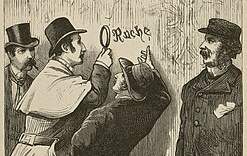 if a kingpin knew a brilliant detective was on his trail, one of the smartest moves available would be to lay a trail of elaborate false evidence leading nowhere - wasting the detective's time on total nonsense while the real crimes continue undisturbed.
controlled opposition is the solution to this problem. simple concept: if revolution is inevitable, you use whatever power you still have to stage a fake one. you give the dissidents something to fight against that poses no real threat to your position. you lead them into the woods.
people who go deep into flat earth theory or reptilian bloodline theories are absolutely convinced they're fighting a corrupt globalist power structure. according to the pied piper theory, that conviction is exactly the outcome the operation is designed to produce. by directing skeptical and naturally rebellious people into rabbit holes that lead nowhere, the operation effectively neutralizes them.
so consider the track record. what have flat earth or reptilian communities actually accomplished? meaningful think tanks? no. core claims proven? no. a single reptilian caught? obviously not. evidence that holds up to scrutiny? they consistently believe they have it - but the pattern is always the same: a cascade of claims gets debunked, more claims replace them, cycle repeats. no ground is ever gained. nothing is ever exposed.
from the perspective of corrupt institutions, this is ideal. the most intellectually restless and potentially dangerous members of the public are kept perpetually busy chasing ghosts. their public credibility gets destroyed in the process - which as a bonus makes it easy to dismiss them regardless of what they say. their social isolation deepens. and the real mechanisms of institutional corruption keep running without serious scrutiny.
there's no smoking gun. no declassified document reading Operation Reptilian Shill - Budget: $4M annually
that needs to be said plainly. the pied piper theory is assessed here as more likely true than false - not as proven fact.
that said, when you evaluate it against the standard criteria for conspiratorial claims, it holds up surprisingly well.
first, the number of co-conspirators required. a pied piper operation doesn't need thousands of people. a small, well-funded team of roughly fifteen skilled agents - backed by bots for reach - could produce high-quality disinformation content at scale. low leak risk from a group that small.
second, motive and profit. the strategic benefit is substantial. neutralizing ideologically active dissidents by tricking them into chasing dead ends is enormously valuable to any institution trying to avoid accountability.
third, the theory doesn't rely on logical fallacies or gish-gallop chains of weak evidence. it's a clean, simple hypothesis that fits available observations.
and finally, occam's razor - applied accordingly. given everything already known about the documented disinfo history of intelligence agencies worldwide, is it really a stretch to suggest they'd take this additional step?
state-sponsored deception isn't ofc uniquely american - despite what popular theories suggest, whether the rothschild-centered ones or the kind that comes straight out of hollywood - it's a universal institutional impulse. and it's not a matter of logic alone: the historical record is already full of it.
however the examples below are all american - not because the US is the worst offender, but because it's the most exposed one. freedom of information laws, congressional investigations, and decades of investigative journalism have dragged its dirty laundry into daylight. other countries do exactly the same things - they're just better at keeping it buried. so, the receipts:
the FBI acknowledged COINTELPRO. they weren't prosecuted for it in any meaningful sense. there's little reason to believe those institutional impulses just evaporated.
what makes the pied piper theory genuinely unusual is that understanding it functions as a kind of inoculation. once you've internalized this framework, you become significantly more resistant to being led down evidence-free rabbit holes. the question to ask when you encounter any conspiratorial claim becomes: does this have solid, verifiable evidence, or is it an elaborate trail leading nowhere? does engaging with this actually threaten any powerful institution, or does it just consume time and erode credibility?
this is why the theory matters beyond its own truth or falsehood. whether or not the state is actively funding flat earth shills, the practical takeaway is identical: blindly following unhinged, evidence-free conspiracy theories is not an act of resistance. it's, at best, a waste of time. at worst, it's playing directly into the hands of the people you imagine yourself to be fighting.
the same dynamic applies more broadly. using identity politics and social grievance frameworks to redirect progressive energy away from scrutiny of institutional power and toward internal cultural conflict - that's another version of the same operation, whether designed that way or just exploited opportunistically. the effect is the same: people who might otherwise be asking difficult questions about power, money and accountability are instead arguing with each other about representation and symbolism. real corruption proceeds undisturbed.
the pied piper works because human attention is limited. the sheer volume of content produced and circulated online is vast beyond any individual's capacity to fully process. every hour spent in a reptilian forum is an hour not spent reading about regulatory capture. every rabbit hole entered is a path not taken toward something that might actually matter, etc.
this isn't some profound psychological insight - it's a basic fact of cognition and time. but the practical implications are significant. being selective about which claims deserve genuine intellectual investment isn't incuriosity - it's basic epistemic hygiene. the bar for investing serious time in a theory should be: is there real, verifiable evidence that holds up to scrutiny? not: is this exciting and does it make me feel like i see what others can't?
the pied piper conspiracy theory can't be proven without a document that will likely never be declassified - if it even exists. but it's a useful lens regardless. it explains a real phenomenon, it fits known history, it requires no extraordinary assumptions, and understanding it actively improves your ability to think clearly about what actually deserves attention and what doesn't.
the fairy tale ends with the children disappearing into a mountainside, never to return. the modern version ends with otherwise sharp minds disappearing into a different kind of mountain - youtube videos, forum threads, conviction without evidence, etc. etc. the door closes behind them all the same.